
Energy
At A Glance: Geological Sample Test Technicians
Geological sample test technicians test or analyze geological samples, crude oil, or minerals to detect the presence of petroleum, gas, or other mineral deposits. They require several years of work-related experience, on-the-job training or vocational training. Such workers earn approximately $25.62 per hour, and the need for such workers grows much faster than the average at a rate of 15% or more per year. Positions related to geological sample test technicians include environmental engineering technicians, chemists, chemical technicians, environmental science and protection technicians, and precision agriculture technicians.
 Entry Level Requirements
Bachelor’s Degree
To become a geological sample test technician, a student must complete a bachelor’s degree.
Energy industry equals $14 Billion
of the Tri-state area’s gross regional product (GRP).
How much can I make?
Hourly Rate: $13 – $52/HR.
Geological Sample Test Technician Job Details
Video produced and provided by CareerOneStop.org
Commonly Performed Tasks
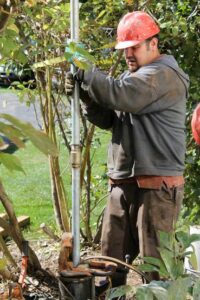
Geological sample test technicians collect and prepare samples for analysis, record testing and operation data, and assemble, operate, or maintain field or laboratory testing, measuring, or mechanical equipment. They also collect operational data for analysis, assemble, operate, or maintain field or lab testing, measuring, or mechanical equipment and participate in surveys.
- Test and analyze samples to determine their content and characteristics using testing equipment
- Collect and prepare or build samples for analysis
- Record and enter sample tests or operational data for review and further analysis
- Assemble, operate, or maintain field or laboratory testing, measuring, or mechanical equipment
- Participate in various surveys, prospecting trips, exploratory drilling, well logging, etc.
Required Job Skills
Geological sample test technicians require specific skills to do their jobs effectively. They must be able to think critically, read and understand complex information, monitor themselves, others, and organizations, and apply scientific concepts to work duties. They also must be able to communicate ideas effectively through writing.
- Critical Thinking
- Comprehend complex informational text and visuals
- Concentrate on a task without being distracted
- Writing
Education & Training Information
Programs and Opportunities
Stark State College
Program: Environmental Health and Safety Technology
Certification: Associate’s Degree
Length: 2 Years
I’d Like to Request More Information. What’s Next?
There are plenty of career and training opportunities in the tri-state area. Click the button below to tell us a little about yourself and what kind of information you’re looking for. A helpful resource will be in touch soon.
Request More Information