
Advanced Manufacturing
At A Glance: Computer Numerically Controlled Tool Operators
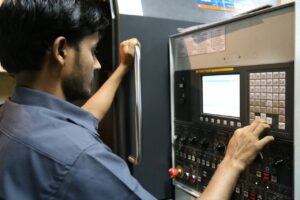
Computer numerically controlled tool operators operate computer-controlled machines or robots to perform machine functions on work pieces. Because of the equipment they work with, CNC operators must have a strong understanding of electronics and computers in addition to materials and manufacturing processes. They may enter computer-generated commands, instructions, and specifications into equipment, install or repair cutting tools or other equipment. When a product has been processed, CNC operators will carefully assess and measure parts to ensure they meet specifications and quality standards.
To become a CNC tool operator requires at least a high school diploma and one to two years of on-the-job training. Some employers require the completion of certifications or apprenticeships. Computer numerically controlled tool operators earn approximately $19.26 an hour.
 Entry Level Requirements
High School Diploma
To become a computer numerically controlled tool operator requires at least a high school diploma. Some positions require a post-secondary certificate, and some require college coursework or apprenticeship.
Production industry is 5th highest ranked job
in the TEAM region with 117,893 jobs in 2018.
How much can I make?
Hourly Rate: $13 – $29/HR.
Job Details: Computer Numerically Controlled Tool Operators
Video produced and provided by CareerOneStop.org
Commonly Performed Tasks
Computer Numerically Controlled (CNC) Tool Operators use precision CNC Tool Operators set up and operate computer-controlled machines and robots to perform manufacturing processes on materials. They do this by inserting computer-generate instructions into the machine and preparing the materials and tools on the machine. CNC Tool Operators may also do basic programming and set-up, preventative maintenance, and quality assurance.
- Mount, install, align, and secure tools, attachments, fixtures, and workpieces on machines
- Transfer commands from servers to computer numerical control modules using computer network links
- Insert control instructions into machine control units to start operation
- Measure dimensions of finished workpieces to ensure conformance to specifications
- Stop machines to remove finished workpieces or to change tooling, setup, or workpiece placement
- Listen to machines during operation to detect potential problems and adjust machines to compensate
Required Job Skills
Computer numerically controlled tool operators require specific skills, abilities and knowledge to do their jobs effectively. They usually work in a team with engineers, programmers and other technologists. They must be able to monitor themselves, others, and machine operations, as well as conduct quality control analyses and operate and control machinery.
- Concentrate on a task without being distracted
- Knowledge of materials, processes, and systems
- Identify, analyze, and solve complex problems
- Knowledge of machines, tools, and materials
Education & Training Information
Programs and Opportunities
Eastern Gateway Community College – Youngstown Campus
Program: Intro to CNC Mill Operator
Certification: Certificate
Length: 4-5 Weeks
Pennsylvania College of Technology
Program: Machine Tool Technology
Certification: Associate’s Degree
Length: 2 Years
Community College of Allegheny County – South Campus
Program: Machine Technician
Certification: Certificate
Length: 18 Months
Eastern Gateway Community College – Youngstown Campus
Program: Intro to CNC Lathe
Certification: Certificate
Length: 6-8 Weeks
Westmoreland County Community College
Program: Journeyman Machining Technology
Certification: Certificate
Length: 1 Year
Westmoreland County Community College
Program: Journeyman Machining Technology
Certification: Associate’s Degree
Length: 2 Years
I’d Like to Request More Information. What’s Next?
There are plenty of career and training opportunities in the tri-state area. Click the button below to tell us a little about yourself and what kind of information you’re looking for. A helpful resource will be in touch soon.
Request More Information